Wondering how to sell at a farmers market without guessing? Start by checking your local license rules, then plan a simple stall, price to cover your costs, and test one market. Small steps keep the risk low.
Selling at market is one part of the bigger picture, so see our guide on how to start a small farm for the rest.
| Item | Value |
|---|---|
| Business licensing area on the city menu | Licenses, Permits & Inspections |
| Food license categories listed | Food Truck or Cart; Caterer or Community Kitchen; Micro Food Wholesaler |
| Door-to-door sales licenses listed | Peddler License; Solicitor License; Youth Fundraising License |
| Street-use permits listed | Obstruction Permit; Use of City Property or Right-of-Way |
| Employment topics listed | Minimum Wage; Sick & Safe Time; Wage Theft Prevention |
These rows come from the menu of the City of Minneapolis farmers market vendors page, which is one city’s example. City pages change, so check the source and your own local office before you rely on them.
Check licenses and permits first
Rules differ by city, county and state, so your first job is to ask the market manager which vendor paperwork they require. A big city shows how layered this can get. The Minneapolis page groups its business licensing pages under Licenses, Permits & Inspections.
The same menu names food categories such as Food Truck or Cart, Caterer or Community Kitchen and Micro Food Wholesaler. It also has a separate Peddler & Solicitor group with Peddler, Solicitor and Youth Fundraising licenses. The menu gives category names only, so it cannot tell you which license category fits your stall.
Bring a short list of questions to the market manager or your local health office:
- Do I need a vendor permit or a market application, and when is the deadline?
- Does my product (raw produce, eggs, baked goods, jarred food) need a food license?
- Is liability insurance expected for vendors?
- Are there labeling rules for packaged goods?
- Do I need to collect sales tax on what I sell?
Set up a stall that sells
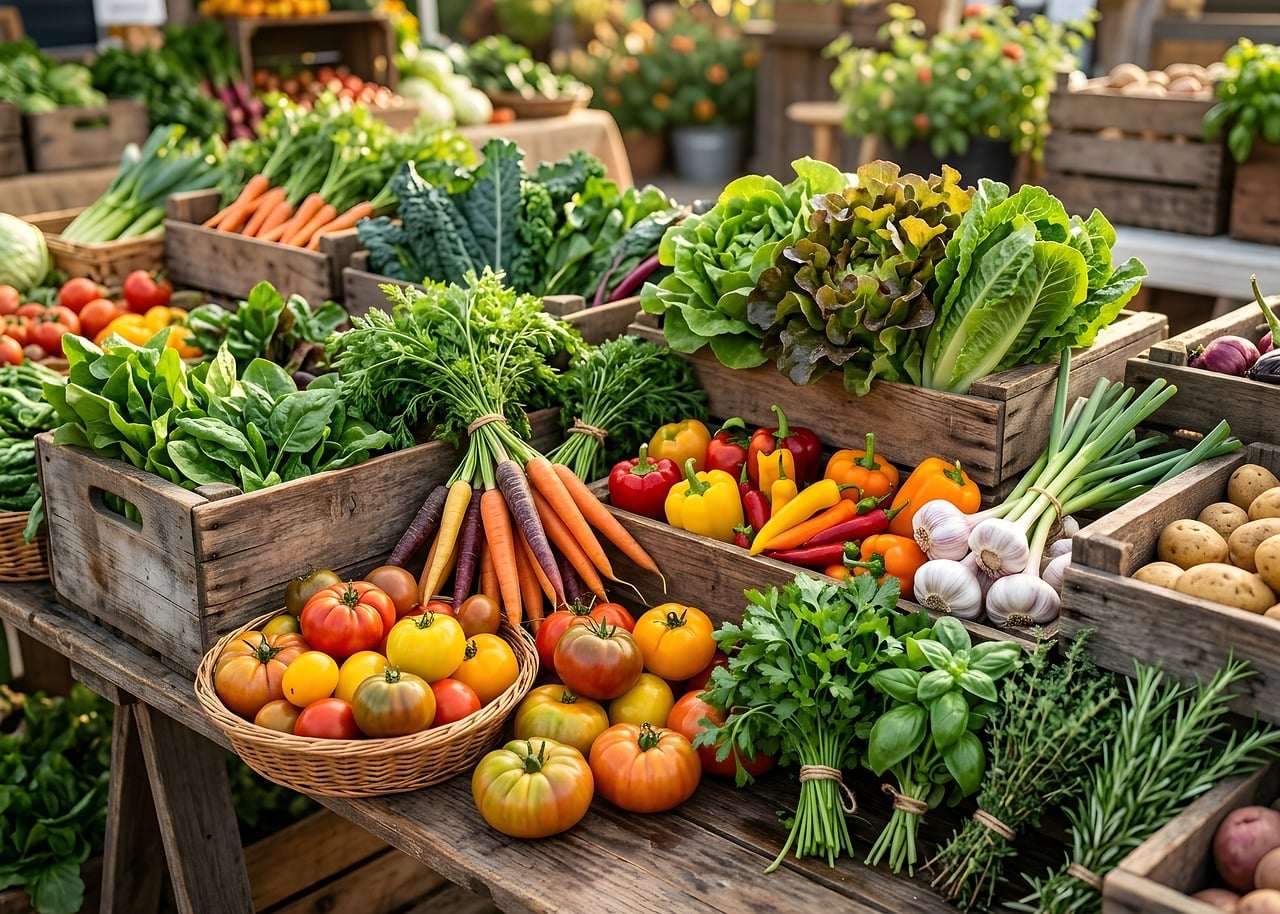
A good stall is easy to read from a few steps away. Customers decide quickly, so a clear display with tidy crates, a bold sign and visible prices does most of the work. Put your best-looking product at the front and refill it as it sells.
If the market sits on a public street or sidewalk, extra permissions may apply. The Minneapolis menu lists names such as Obstruction Permit and Use of City Property or Right-of-Way, as shown on the city’s vendor page. Your market manager will know whether anything similar is needed where you live.
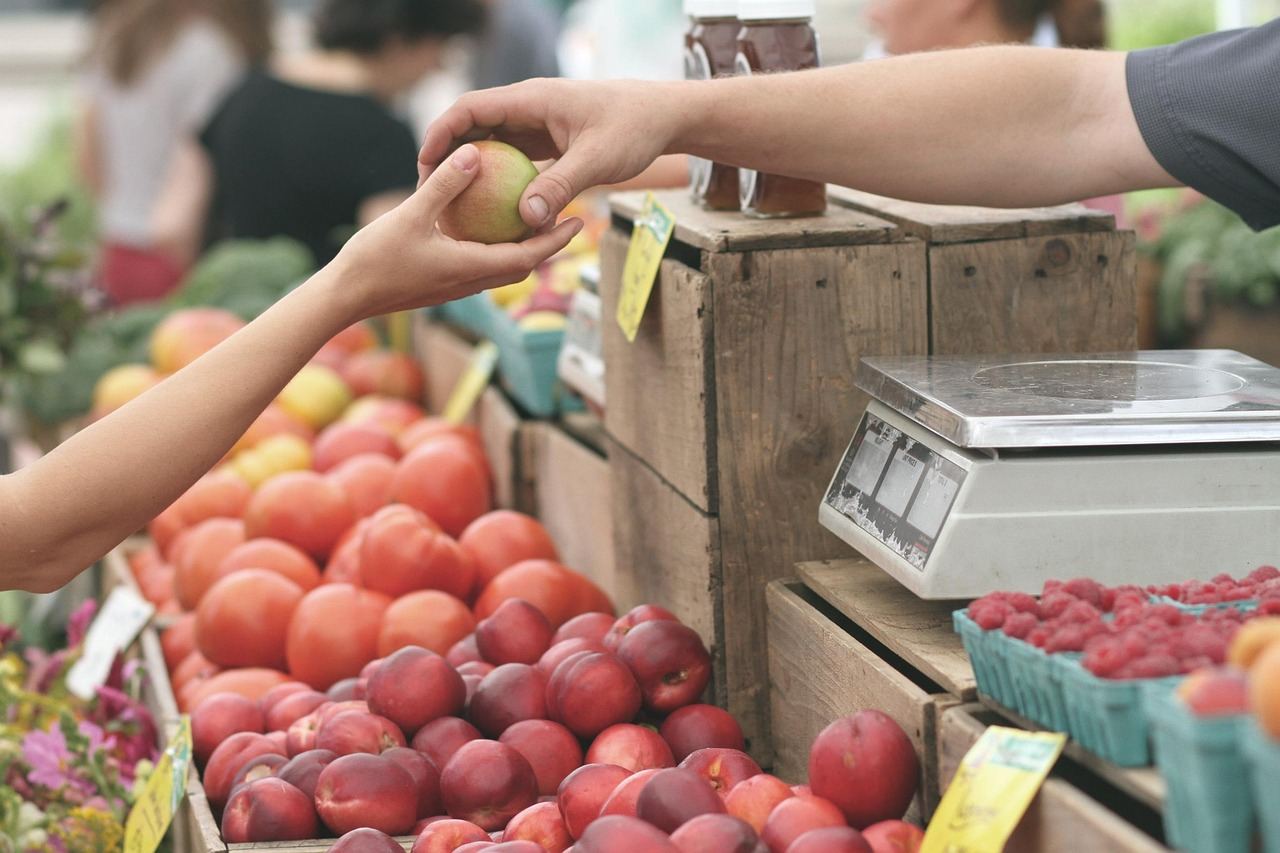
Pack a kit you can reuse every week:
- A sturdy table, a tablecloth and a canopy or shade, weighted against wind
- Price signs, a farm name banner and a short line about how you grow
- Bags, baskets and a cooler or ice packs for anything that must stay cold
- A cash box with small bills and coins, plus a phone or card reader
- Hand sanitizer, wipes, a notebook and a pen
How do you price farmers market produce?
Price so that each item covers your true costs and still leaves you something for your time. Many new vendors copy the lowest stall, then find they work for almost nothing. Work through it in order:
- Add up seed, feed, packaging, fuel, market fees and helper pay for a typical week.
- Divide by the amount you expect to sell to get a minimum price per unit.
- Walk the market and note what similar sellers charge, and how their quality compares.
- Choose round prices that make change easy, and offer bundles for larger sales.
- Review after a few weeks and raise prices on items that sell out early.
Quality and story justify a fair price. Shoppers at markets often expect freshness and a face behind the food, so say what makes your crop different, and do not apologize for charging what it costs to grow.
Keep records, money and help organized
Write down every sale and every stall expense from the first day. A simple notebook or spreadsheet is enough, and it makes tax time far easier. Read up on farm tax deductions so you know which receipts are worth keeping.
If you hire helpers, check wage rules in your area first. The Minneapolis menu lists Minimum Wage, Sick & Safe Time and Wage Theft Prevention under working in the city, according to the same vendor page. Your own state or city may have different employment rules, so confirm them locally.
Choose a market and start small
Visit a few markets as a shopper before you apply. Look at foot traffic, the mix of vendors and whether anyone already sells your product. A market where you fit a gap in the offering is easier to win than one crowded with your exact crop.
Start with one market and a small amount of stock so a slow day costs little. Track what sells, what you carry home and which hours are busiest. Once you know your numbers, you can add a second market or more product, and you may later want equipment such as the best compact tractor for small farm work as your acreage grows.
Frequently asked questions
Do I always need a license to sell at a farmers market?
Show answer
Not always the same one, and it depends on what you sell and where. Whole produce, eggs and processed foods are often treated differently, so ask the market manager and your local health office before your first day.
What should I bring on my first day?
Show answer
Bring a table, shade, signs with clear prices, bags and a way to take payment. Add a cooler for perishables and a cash float of small bills, then keep a notebook handy to log sales.
How do I avoid underpricing my products?
Show answer
Work out your cost per unit before you look at other stalls. Use competitor prices as a check rather than a target, and raise prices on anything that sells out quickly.
Can I sell at more than one market?
Show answer
Yes, but it is wise to master one first. Once you can pack, sell and restock smoothly, a second market spreads your risk and shows you which customers buy the most.