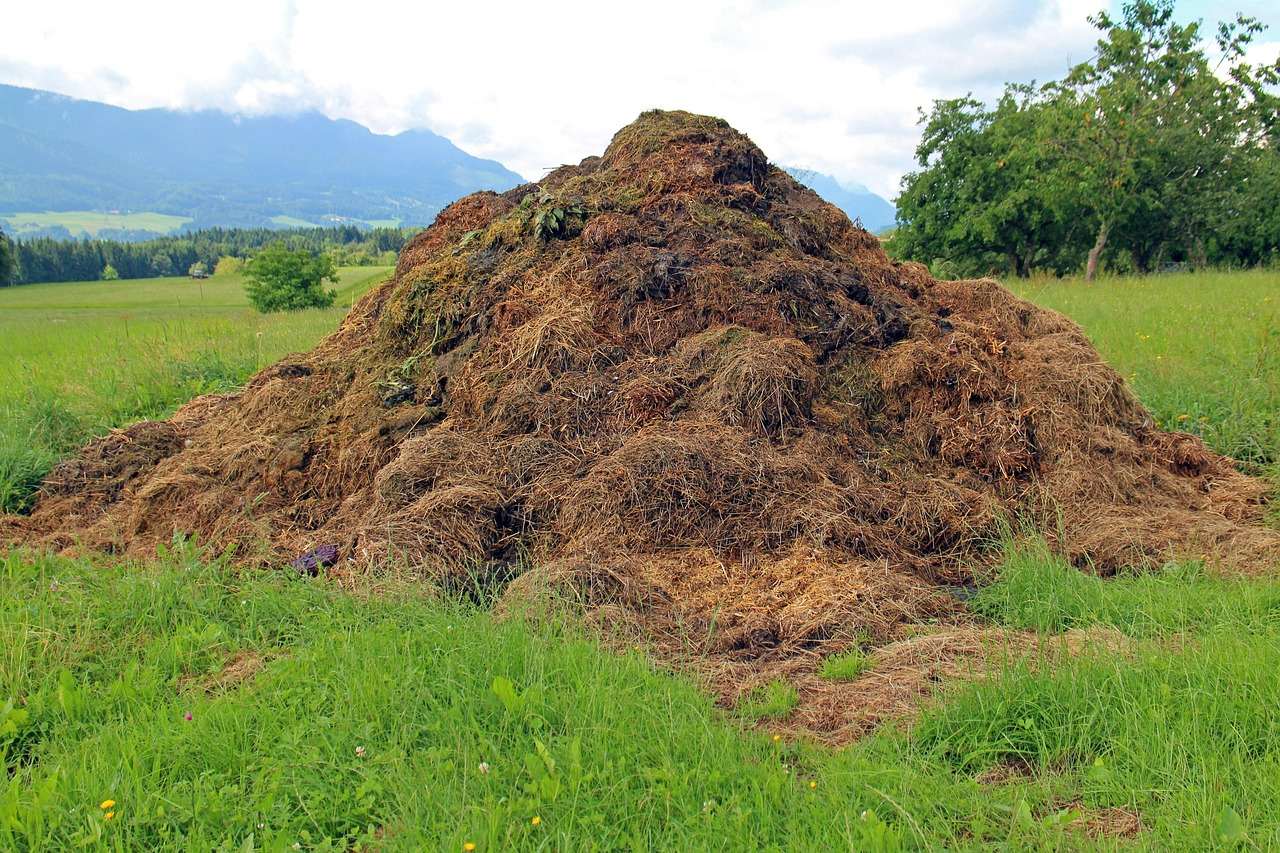
Manure piling up and unsure where to begin? Here is how to start composting on a farm: mix carbon-rich bulking material into manure, keep the pile damp, and turn it as it cools.
This guide is part of our look at small farm vegetable gardening, where finished compost feeds the soil your crops grow in.
| Item | Value |
|---|---|
| Ideal carbon-to-nitrogen (C:N) ratio | 25:1 to 30:1 |
| Ideal moisture in the pile | 50-60% |
| Temperature that destroys pathogens | Above 131℉ |
| Temperature that destroys most weed seeds | Above 145℉ |
| Recommended pile or windrow height | 3.3 to 5 feet |
| Time to a mature batch | Up to six months |
These figures come from UW Extension and NC State Extension. They can change, so check the sources before you rely on them.
Is composting worth it on your farm?
Composting is the breakdown of organic material by microorganisms that live in air. According to UW Extension, composting manure can reduce pathogen concentrations, weed seeds, odor and overall by-product volume.
The main cost is lost nutrients. In a three-year Nebraska study, as much as 40 percent of the nitrogen in beef feedlot manure and 60 percent of its carbon was lost to the atmosphere during composting.
Given those losses, the same Nebraska guide suggests spreading raw manure directly unless you need to improve its handling, kill weed seeds and pathogens, or cut odor. It also lists processing time, handling equipment and land for the piles as further costs.
On the plus side, finished compost lasts longer in the soil than crop residues or manures that rapidly degrade once added, as NC State Extension explains for the humid Southeast. Compost and the best cover crops for vegetable gardens both feed the soil, so the two can work side by side.
Choose a composting method that fits your scale
NC State Extension covers three widely used on-farm systems: passive pile, windrow and aerated static pile. UW Extension adds that windrows and bin systems are two of the most popular, with in-vessel systems as a more sophisticated option.
- Passive pile: a heap that relies on natural airflow rather than blowers.
- Windrow: a long row that is re-mixed by hand, with a front-end loader, or with other specialized equipment.
- Aerated static pile: perforated pipe laid under the pile so blowers and fans can push oxygen into it.
- Bins: like windrows, bin piles need frequent turning or blower aeration to stay aerobic.
Build a windrow or pile about 3.3 to 5 feet high and keep airflow through it unblocked, says UW Extension. A static pile may need a porous layer called a plenum, which can remove the need for manual or mechanical turning.
Any system can be roofed or open, depending on climate and budget. In open areas, rain affects the process, so plan runoff control and collection before you build.
Get the recipe right: carbon, nitrogen and moisture
Microbes work best when the C:N ratio sits between 20:1 and 40:1, ideally 25:1 to 30:1, according to UW Extension. In most cases you will need to add carbon to manure to reach that range.
Pick dry, fibrous materials, as the Nebraska guide recommends for wet manure:
- Straw, wood chips or shavings, and corn stalks are common carbon sources.
- Sawdust, leaves, finely chopped straw or peat moss act as bulking agents that hold air spaces open.
- Extra carbon also helps hold on to nitrogen that would otherwise escape.
Keep moisture in the 50-60% range, per UW Extension. Fresh manure can supply some of that water, but piles dry out as they are aerated, so add water back when needed.
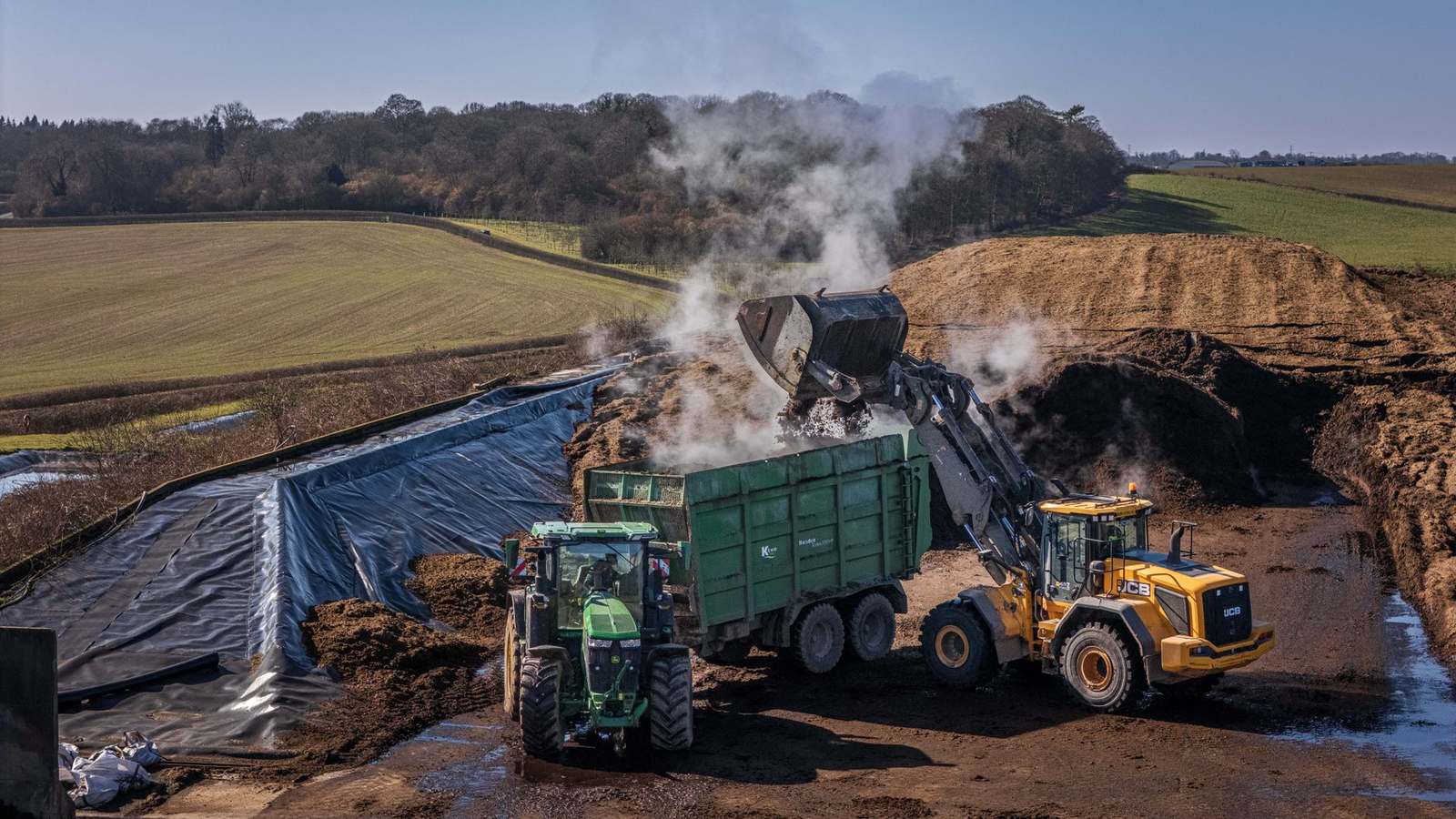
Manage heat, air and turning
Temperature is your progress report. NC State Extension says the first, mesophilic stage lasts one to two days, then a thermophilic stage of several weeks follows, with the pile’s center climbing to about 120℉ to 150℉.
Follow these steps once the pile is built:
- Check temperature with a long thermometer; NC State describes one with a 2- to 3-foot probe.
- Record readings daily from several locations in each pile or windrow, as UW Extension advises.
- Look for readings above 131℉ to destroy pathogens and above 145℉ to destroy fly larvae and most weed seeds (NC State Extension).
- Turn the pile once it reaches the weed-seed temperature, so beneficial microbes are not killed at higher heat (UW Extension).
- If readings fall, add oxygen or moisture by turning and wetting the pile.
Do not let it overheat. When a pile reaches the 150℉ to 160℉ range, thermophilic organisms begin to die and composting slows, and NC State Extension warns that spontaneous combustion can occur in piles that become too hot and dry.
Troubleshooting common composting problems
Most problems trace back to air, water or the carbon mix. Match the symptom to the likely fix:
- The pile cools early: a falling temperature points to a need for more oxygen or moisture, so turn it (NC State Extension).
- The pile is soggy and compact: add a dry, fibrous bulking agent, because wet material cannot keep air spaces open (Nebraska guide).
- The pile is hot and dry: supply moisture and air by wetting and turning it.
- Nitrogen keeps escaping: work in more high-carbon material to raise the C:N ratio.
- Results swing by season: weather can cause significant differences in compost made at different times of year, according to UW Extension.
How to tell when compost is finished
Mature compost is dark brown to black, sweet or neutral in smell, and soil-like in texture, and none of the original feedstocks should be recognizable. NC State Extension adds that many mixtures need a curing period of up to 30 days after the materials break down.
Management shapes quality. Compost made with close control of oxygen, C:N ratio, moisture and temperature tends to have low odor and fewer weed seeds and pathogens, UW Extension reports. Higher quality matters most for packaged compost, greenhouses and produce gardens.
If you follow no till gardening, finished compost gives you a way to keep adding organic matter without digging it in.
Frequently asked questions
How long does it take to make compost?
Show answer
Plan for a window of up to six months, depending on what you are composting. Grinding woody materials first helps them break down faster, according to NC State Extension.
Do I need a roof over my compost?
Show answer
No, UW Extension says systems can be covered or uncovered to suit climate and budget. If you leave yours open, expect weather to influence the results and set up a way to control and collect runoff.
Why add carbon-rich material to manure?
Show answer
It slows nitrogen loss. The Nebraska guide cites a poultry manure study where nitrogen loss fell by 30 percent as the C:N ratio rose from 15 to 20.
Can I sell the compost I make?
Show answer
You can, but UW Extension notes that most producers must build their own market. Lower-quality compost still has fertilizer value and suits on-farm use or local bulk sales.