Your space is limited, so every tree has to earn its place. The best fruit trees for small farms are dwarf and semidwarf apples, plus self-fruitful peaches, set on a well-drained, frost-safe site.
This guide is part of our wider look at small farm vegetable gardening, where tree fruit sits alongside beds and rows.
| Item | Value |
|---|---|
| Dwarf apple minimum spacing | 8 feet |
| Semidwarf apple minimum spacing | 18 feet |
| Dwarf apple mature height | 8-10 feet |
| Dwarf apple age to bearing | 2-3 years |
| Peach life expectancy | 15-20 years |
| Height on seedling rootstock | 25 to 30 feet |
Spacing, bearing age and life-span figures come from Virginia Tech Extension, and height figures from Iowa State Extension. They can change, so check the sources before you rely on them.
Why dwarf and semidwarf trees suit small acreage
Tree size decides how many trees you can fit and how easy they are to look after. Virginia Tech Extension notes that dwarf trees bear earlier than standard-sized trees, take up less space, and can be pruned and sprayed with ordinary home equipment.
Rootstock sets the final size. Iowa State Extension gives these ranges for apple trees:
- Dwarf rootstock: trees grow to approximately 8-10 feet tall and often need support (Iowa State).
- Semidwarf rootstock: trees reach about 15 feet tall (Iowa State).
- Seedling rootstock, meaning no dwarfing: trees reach 25 to 30 feet tall and wide (Iowa State).
An Illinois Extension horticulturist suggests aiming for a mature height in the six to eight foot range. Even when space is not a concern, he adds, large trees take far more time and resources to manage, as described in Illinois Extension’s guide to ordering fruit trees.
Apples: the anchor of a small orchard
Dwarf apples are the most forgiving small-farm tree because they are much easier to train, prune and maintain than full-sized trees, according to Illinois Extension’s apple-selection post. The University of Delaware adds that dwarfing rootstocks shorten the time to the first full harvest and reduce the need for ladders.
In Virginia Tech’s spacing table, a dwarf apple needs at least 8 feet between trees, starts bearing at 2-3 years and yields about 2 bushels. A semidwarf needs 18 feet, bears at 4-6 years and yields about 4 bushels. The same table lists a dwarf apple’s life expectancy at 30-35 years.
Look for spur-type trees as well. Iowa State Extension says they tend to be more compact, with fewer long lateral shoots and earlier fruiting than standard types, which also makes pruning easier.
Ask the nursery which rootstock your tree is on. Common choices in Iowa include EMLA 7 (semi-dwarf), B9 (dwarf) and G41 (dwarf), while M26 is common but highly prone to fire blight, per Iowa State Extension.
Pick disease-resistant varieties
The University of Delaware says apples have many insect and disease issues, so choosing varieties with scab and fire blight resistance is essential for a home orchard (University of Delaware). For Iowa conditions, Iowa State Extension recommends these resistant cultivars:
- Liberty
- GoldRush
- Freedom
- RubyRush
- Dayton
The same Iowa State page says Cortland, Fuji, Gala, Golden Delicious, Granny Smith, Honeycrisp and Jonathan need frequent fungicide applications and are not recommended for home gardens. Climate and disease pressure differ by region, so ask your local extension office to confirm your shortlist.
Peaches, plums, cherries and pears: what to add
Beyond apples, these fruits come with shorter lives or longer waits, so add them one species at a time. Virginia Tech’s spacing table shows the trade-offs:
| Fruit | Minimum spacing | Bearing age | Life expectancy |
|---|---|---|---|
| Peach | 20 feet | 3-4 years | 15-20 years |
| Plum | 20 feet | 4-5 years | 15-20 years |
| Sour cherry | 18 feet | 4-5 years | 15-20 years |
| Sweet cherry | 25 feet | 5-7 years | 20-30 years |
| Standard pear | 25 feet | 5-8 years | 35-45 years |
These figures come from the table in the Virginia Tech Extension home garden tree fruit guide. They are minimum distances for home orchards and can change, so check the source before planting.
Peaches are quick but short-lived. The University of Delaware advises choosing peaches and nectarines with bacterial spot resistance, and Illinois Extension lists peaches, nectarines and sour cherries as self-fruitful stone fruits, so a single tree will set fruit.
Pears are the slowest of the group. The University of Delaware says pears may take up to 5 years or more to produce fruit, so plant them only if you can wait.
Be careful with dwarf versions of these species. Virginia Tech Extension does not recommend dwarf pear, peach or cherry trees because they may not survive more than five years due to disease and incompatibility problems. Treat dwarf apples as your safe small-tree choice.
Pollination: how many trees do you really need?
Pollination decides whether a tree that blooms every spring actually sets fruit. The common fruits fall into a few groups:
- Plant one: peaches, apricots and nectarines are self-fruitful, according to the University of Delaware.
- Plant partners: apples, pears, and some sweet cherries and plums need cross-pollination, so several varieties must go in (University of Delaware).
- Watch the exceptions: sour cherries cannot pollinate sweet cherries because they are different species, and Japanese and European plums are not generally effective pollinizers for each other (Virginia Tech).
For apples, Iowa State Extension says to select at least two cultivars that bloom at the same time. Virginia Tech Extension goes further and says to plant at least three varieties of apples to be certain of adequate cross-pollination.
Some cultivars, such as Jonagold, have sterile pollen. If you want one, Iowa State Extension says a minimum of three different cultivars must be planted. Virginia Tech also warns that Summer Rambo, Winesap and Stayman will not cross-pollinate, so do not build a planting from those alone.
Extra varieties also stretch your season. The University of Delaware notes that each variety has a harvest window of less than two weeks, so multiple varieties are needed to extend the harvest.
Choosing a site that protects blossoms and roots
Cold air flows downhill, so air drainage matters. Virginia Tech Extension says fruit buds on plants set in a low spot are more likely to be killed than those on a slope. Iowa State adds that apple trees perform best in full sun, with direct sunlight for most of the day.
Soil comes next. Virginia Tech’s rule is short: moderately fertile soil is desirable, but deep, well-drained soil is vital. Iowa State Extension says tree fruits perform best in soils with a pH of 6.5 to 7.0, and recommends a soil test before planting.
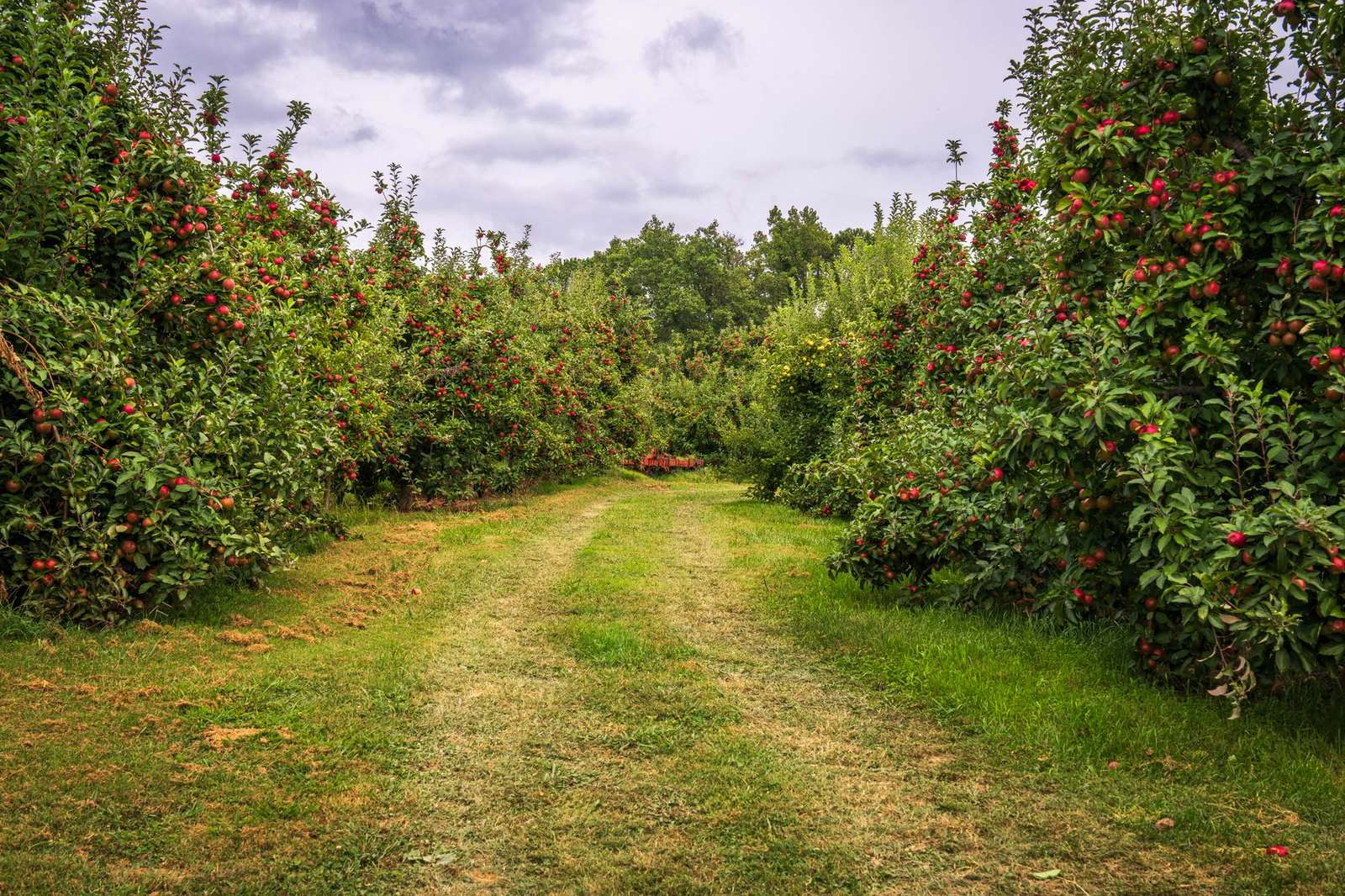
Do not replant in the same spot too quickly. Iowa State Extension says to avoid immediately replanting a site with apples, or a close relative such as pears, after trees were lost or removed for low productivity, because soilborne disease risk rises.
Planting and first-year care
The University of Delaware calls tree fruit one of the more challenging endeavors for the hobbyist. Virginia Tech’s advice is to never plant more than you can care for properly. Its steps for a clean start are below.
- Buy well-grown, heavily rooted, one-year-old grafted trees from a reputable nursery, order them in winter, and plant in early spring (University of Delaware).
- Soak bare-root trees so every root is covered with water, for up to 4 hours (University of Delaware).
- Set the tree so the graft union stays above the soil line, and put no fertilizer or compost in the planting hole.
- Fit a tree guard against rodents and bury its bottom 1 to 2 inches (University of Delaware).
- Two weeks after planting, apply a small amount of fertilizer at least 6 inches from the trunk (University of Delaware).
Roots must never dry out in the first season, so it is worth reading about drip irrigation for vegetable garden beds and thinking about how similar lines could reach your trees. Once the trees are in, the companion planting guide is a good next read for deciding what shares the ground around them.
Frequently asked questions
Which fruit tree is the easiest to start with?
Show answer
For northern Illinois, Illinois Extension says apple is likely the main backyard fruit tree because it is the hardiest. Once you have a handle on apples, expanding to other trees gets easier, as noted in its apple-selection post.
Can I get away with planting just one apple tree?
Show answer
Sometimes. If a neighbor’s flowering crabapple, or a different apple variety, blooms at the same time as yours, its pollen can fertilize your tree, so you may not need a second one (Illinois Extension).
When will my trees give me a real harvest?
Show answer
The University of Delaware says peaches, nectarines, dwarf apples and cherries can be harvested in the third year. Training and pruning habits then decide how productive they stay.
Is a south-facing slope a good spot?
Show answer
It warms early, which pushes buds out sooner and can invite frost damage. Virginia Tech Extension recommends late-blooming varieties for that location.
Can I grow fruit trees organically?
Show answer
Expect a struggle. According to the University of Delaware, insect and disease management is a significant challenge for home gardeners, and organic production is very challenging. Check pest guides from your local extension service before you buy.