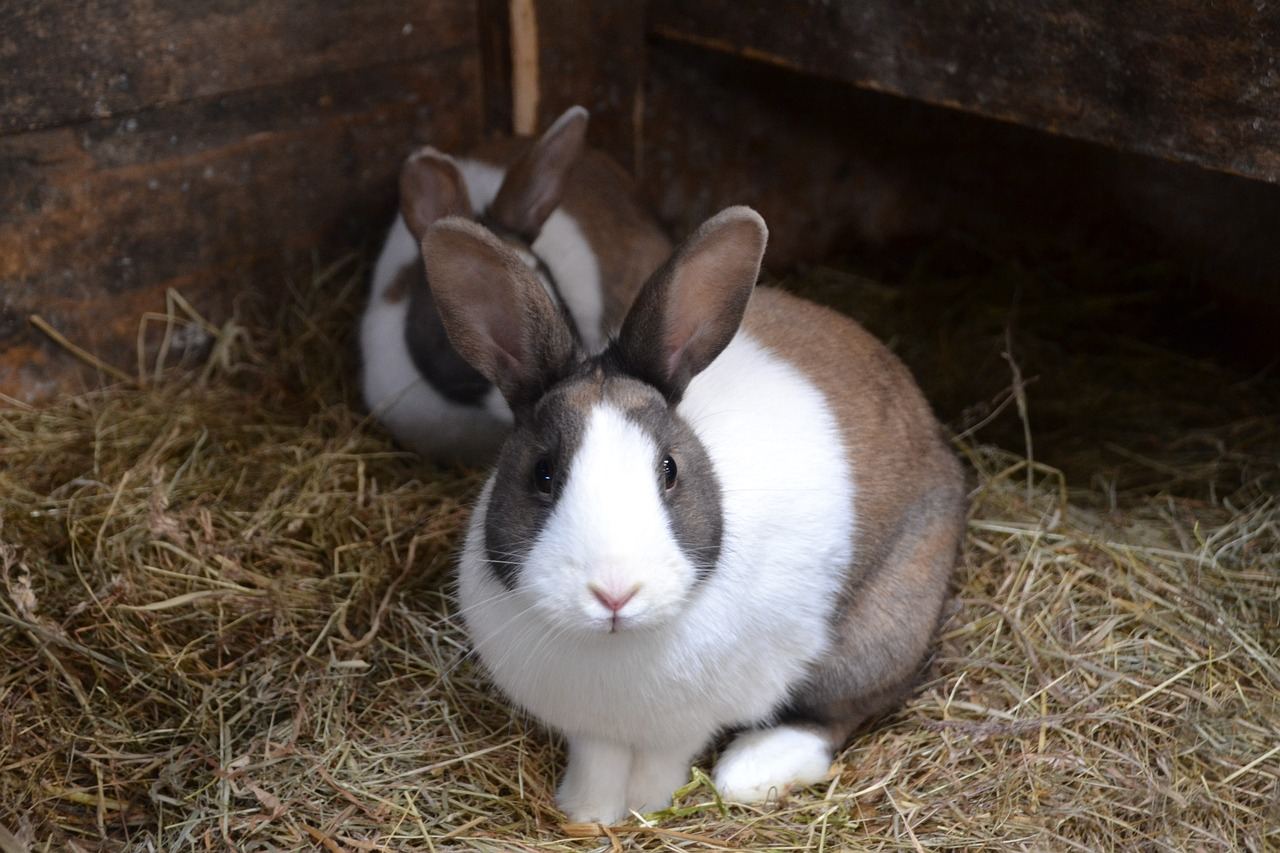
Wondering where to begin with raising meat rabbits for beginners? Start small: about four breeding does and one buck can supply two fryers a week, in a backyard that neighbors rarely notice.
This guide is part of our series on livestock for small farms, where rabbits sit alongside larger animals.
| Item | Value |
|---|---|
| Breeding stock for two fryers a week | About four does and one buck |
| Labor per breeding doe | About 20 hours per year |
| Labor for four does | 60 hours per year, under 15 minutes per day |
| Rabbit meat, skinless | 22.8% protein, 6.3% fat |
| Fryers per doe in the bulletin’s budget | 30 fryers |
These figures come from the University of Maine Cooperative Extension bulletin on backyard meat rabbits, written for Maine conditions. Figures can change, so check the source before you rely on them.
Start with a goal, not a cage
Before you buy a single rabbit, decide what you want from them. The bulletin’s example goal is two fryers each week all year, which it says calls for about four does and one buck, as the extension bulletin explains.
A backyard herd is typically four to five breeding does. According to the same source, it takes little time or money to scale the operation up or down, which keeps the risk low for a first-timer.
Still weighing rabbits against other animals? Our look at the best livestock for small farm options is a good next read, and our page on how many cows per acre shows the stocking math for much larger animals.
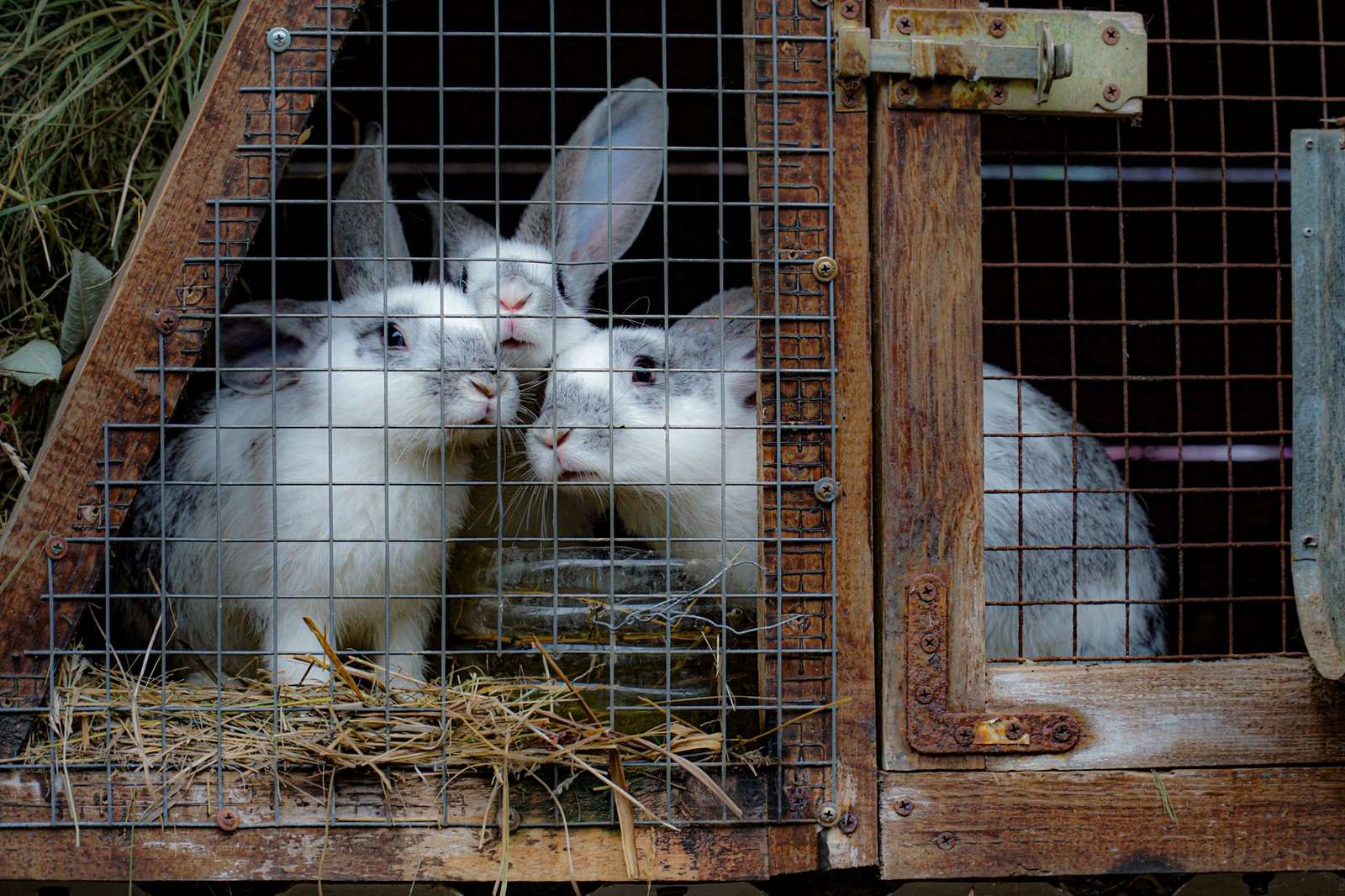
How much time do meat rabbits take?
Less than most people expect. The bulletin puts the work at about 20 hours per breeding doe per year.
For a four-doe setup, that adds up to 60 hours per year, or less than 15 minutes per day. Plenty of families spend longer simply because they enjoy it, and the chores can be shared among almost everyone in the household.
Check local rules before you build
Rabbits are quiet, odorless and docile, and they often go unnoticed by neighbors, even in residential areas. That is a real advantage over many other animals.
Still, call your town office first if you live within legal city limits. The bulletin advises asking about restrictions on keeping rabbits before you invest in housing.
What do you get from the meat and the manure?
The bulletin cites USDA figures describing rabbit as an all-white meat that is high in protein and low in fat and cholesterol. It is leaner than beef or pork, though not higher in protein than chicken.
| Skinless meat | Protein | Fat |
|---|---|---|
| Rabbit | 22.8% | 6.3% |
| Chicken | 28.9% | 7.4% |
| Beef | 29.9% | 10.1% |
| Pork | 27.7% | 14.8% |
The table is drawn from Table 1 of the extension bulletin, which credits USDA handbooks. Its rabbit figure is a whole-carcass number from a 1989 handbook, while the other meats are composite samples, so treat the comparison as a rough guide.
On cholesterol, the same table lists rabbit at 55 mg per oz. against 80 mg per oz. for chicken.
The other product is manure. The bulletin reports rabbit manure at 3.71% nitrogen and 3.47% potassium, against 2.90% nitrogen and 2.14% potassium for cattle, and calls it excellent compost for the garden (source).
Breeding, fryers and where to find the details
The bulletin’s budget assumes 30 fryers from one doe in a year, each sold or eaten as a 4½-pound live fryer at 10 weeks of age. That budget is dated Jan. 2014 and leaves out the cost of the buck and the building, so rebuild it with today’s prices (source).
Its contents also list a management schedule for 6 or 8 litters per doe in one year, plus a feeding chart (Table 5) and sections on health management and predator control. This page does not reproduce those tables, so read them in the full bulletin before you settle on a feed or breeding plan.
A sensible order of work for a first-timer:
- Set a production goal, such as fryers per week.
- Check your town’s rules on keeping rabbits.
- Work out a budget with local prices for feed and housing.
- Study the feeding chart and the breeding schedule.
- Plan housing that keeps predators out.
Frequently asked questions
How many rabbits should a beginner start with?
Show answer
A single buck and a handful of does is the usual backyard scale. The extension bulletin treats a four-doe setup as workable for a family that wants steady meat, so you can start at the low end and add more later.
Are rabbits noisy or smelly?
Show answer
Not by the standards of most livestock. The bulletin describes them as quiet and odorless, though your town may still have its own rules, so ask before you build.
How old is a rabbit when it is ready for the table?
Show answer
In the bulletin’s budget, fryers are sold or eaten at 10 weeks of age (source). Your own timing will depend on breed, feed and management.
Can I trust the budget in the bulletin?
Show answer
Use it as a template rather than a price list. It was projected for Jan. 2014, and costs for feed and materials have moved since, so fill in your own local numbers.