Worried that goats will outsmart you? Raising goats for beginners comes down to three things: strong fencing, dry shelter and steady daily care. Get those right before the animals arrive and the rest gets much easier.
This guide is part of our wider look at livestock for small farms, where goats sit alongside other species.
| Item | Value |
|---|---|
| Goat gestation | 5 months vs 9 months in larger livestock species |
| Typical life span | Up to about 10 – 14 years |
| Daily dry matter intake | About 2 – 3% of body weight |
| Forage for a 150 lb doe | About 3 – 4.5 lbs per day (dry matter basis) |
| Unirrigated land for ten 150 lb does | 20 – 40 acres, year-round |
These figures come from UF/IFAS Extension DeSoto County and UC ANR. They can change as guidance is updated, so check the sources before you rely on them.
Why do goats suit small farms?
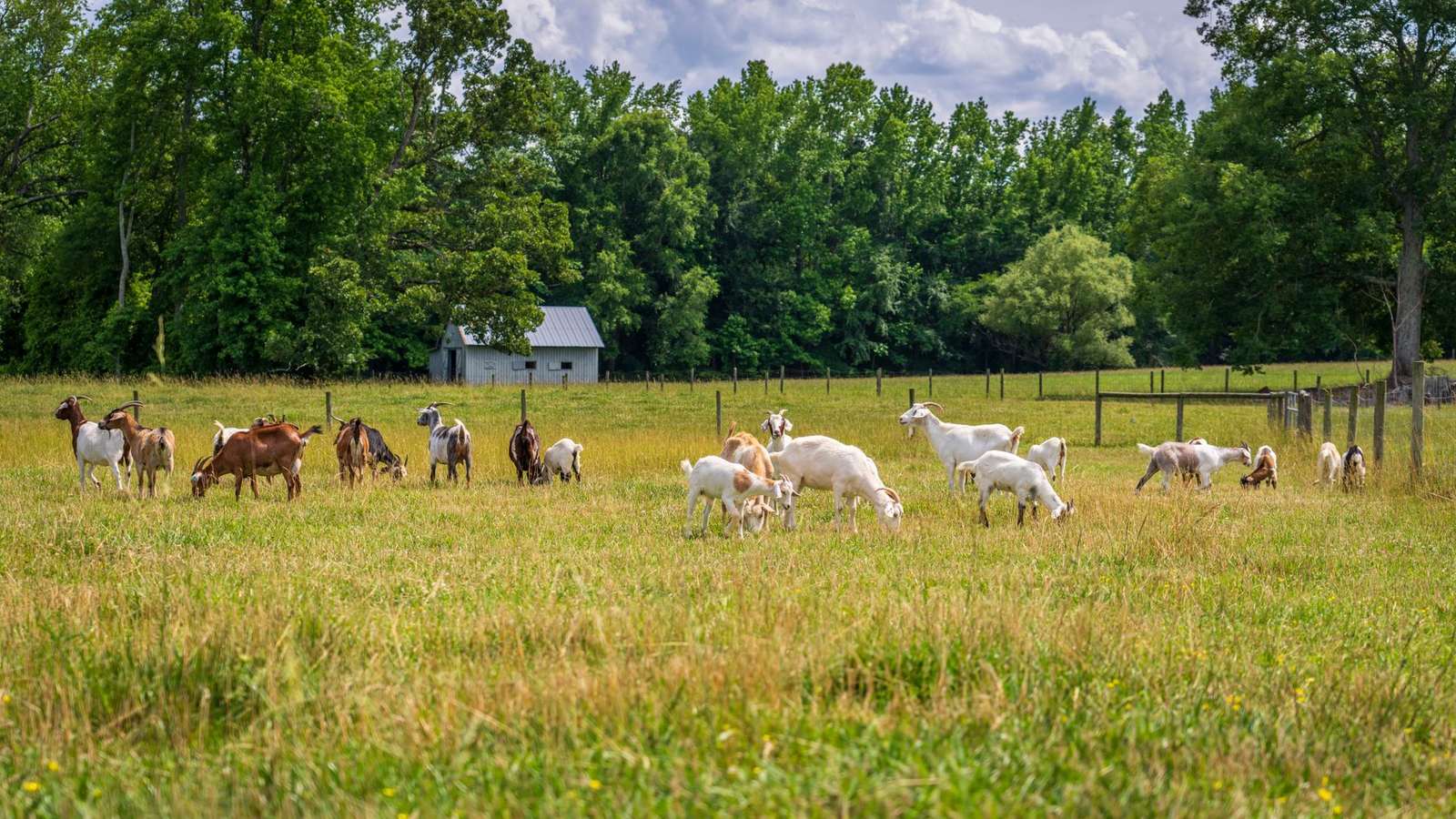
Goats can be raised for meat, milk, or fiber, and UF/IFAS Extension calls them well suited to many small-acreage and diversified farming operations. Their shorter gestation is 5 months vs 9 months, and they cost less to feed than larger species.
The catch is that goats are intelligent, curious problem-solvers. The same UF/IFAS page warns they will quickly find weaknesses in fencing or facilities, so setup matters more than the purchase price of the animals.
Many small farms also keep birds, and the question of how much space do chickens need comes up quickly when you plan shared yards. If you are weighing goats against another small ruminant, how many sheep per acre is a useful comparison.
Choosing meat, dairy or fiber goats
Each type shares the same basic care needs but carries its own workload. Beginners tend to do best with one primary focus, expanding once they gain experience, according to UF/IFAS.
- Meat goats: Boer and Spanish goats are popular for growth rate, muscling and adaptability, per UF/IFAS. UC ANR lists Kiko does at about 100 – 180 lbs and Boer does at 200 – 225 lbs, with kids most commonly sold at 4 – 6 months old or about 50 – 80 lbs.
- Dairy goats: Nubian, Saanen, Alpine, LaMancha and Nigerian Dwarf are well known for milk production and temperament. Does must be milked consistently, often once or twice per day, so expect a bigger time commitment (UF/IFAS).
- Fiber goats: Angora goats produce mohair, and cashmere-type goats produce a fine undercoat. They must be sheared or combed regularly and kept out of moisture and extreme weather (UF/IFAS).
Fiber production adds labor and weather sensitivity, so it suits people who already have a specialty market in mind. Dairy suits households that can be home at milking time every day.
Housing and fencing that hold
Goats need protection from rain, wind, heat and cold. A simple three-sided shed, small barn or enclosed structure with good ventilation is usually enough, as long as it stays dry and well maintained, says UF/IFAS.
Fencing is where most beginners get caught out. Woven wire, field fencing with electric offset, and electric net fencing are commonly recommended, and posts should sit closer together than you would set them for cattle or horses.
Reinforce gates and corners, and walk the fence line regularly. Good fencing also keeps predators such as dogs and coyotes away from your herd.
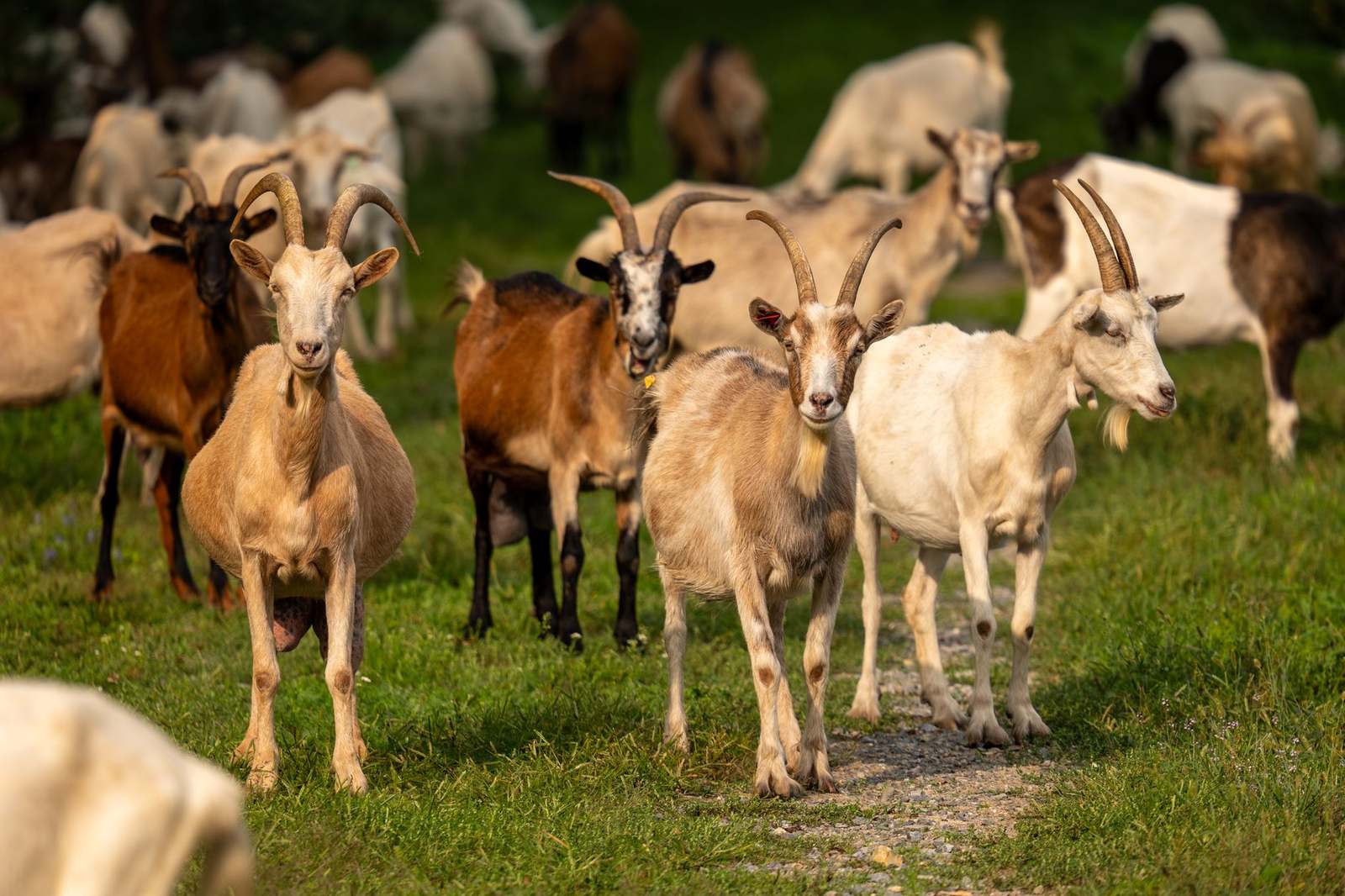
Feeding and how much land you need
Goats are browsers. According to UC ANR, they prefer the leaves, shoots, branches and bark of shrubs and trees as well as grass and forbs, and they tolerate bitter feeds better than sheep do.
Plan on about 2 – 3% of body weight in dry matter every day. For a 150 lb doe that works out to roughly 3 – 4.5 lbs of forage.
Land is the surprise for many new keepers. On unirrigated ground, ten 150 lb does would need 20 – 40 acres year-round, so most small-acreage owners fill the gap in one of these ways:
- Irrigated pasture
- Hay
- Protein blocks, used together with hay or irrigated pasture
- Grazing on neighboring properties, or keeping goats in confined housing for part of the year
Grazing style affects parasites too. Free-ranging goats avoid plants fouled by their own manure or urine, but in confined grazing they may be forced to eat it, which can increase parasite spread (UC ANR).
Health basics: vaccines and parasites
Not every vaccine suits every farm, so work with a veterinarian to build a cost-effective program for your herd. UC ANR says the usual advice is to vaccinate does in late pregnancy against Clostridium perfringens type C and D (overeating disease) and tetanus.
Kids then gain temporary immunity by drinking colostrum, the first milk after kidding. They should be vaccinated and boostered per label directions at weaning for longer-term protection.
Coccidia is a common internal parasite, and scours is its most recognized sign. Prevention rests on a diet that meets energy, protein and mineral needs, plus good barn hygiene, manure management or rotational grazing. Coccidiostats should be used strategically rather than fed year-round.
A pre-purchase checklist for new keepers
Work through these steps before any goat steps off the trailer:
- Pick one purpose (meat, milk or fiber) and learn its daily labor.
- Build or repair fencing and a dry shelter first.
- Estimate forage supply, then budget for hay to cover shortfalls.
- Line up a veterinarian who will set your vaccine and parasite plan.
- Read the free Wisconsin 4-H guide to raising healthy goats, which covers food, housing, disease protection and handling basics.
Frequently asked questions
How long do goats live?
Show answer
Plan for a decade or more. UC ANR says goats can live up to about 10 – 14 years old.
Are goats really easier than cattle or horses?
Show answer
Sometimes, but not by much effort. UF/IFAS notes that goats can be easier to manage than larger livestock, yet they still demand careful planning, good facilities and consistent daily care.
Can I keep goats on a small parcel?
Show answer
Yes, because of their size goats suit smaller parcels, according to UF/IFAS. UC ANR adds that small-acreage owners must watch how much forage grows and how much supplemental feed must be brought in.
How can I tell how old a goat is?
Show answer
Check the lower front teeth. A goat gains one set of permanent lower incisors each year for the first 4 years of life, replacing baby teeth, so counting permanent sets gives a rough age (UC ANR).